What Makes Adhesives Sticky? Adhesion and Cohesion
It’s an everyday miracle we rarely stop to think about. From the small piece of tape holding a note to the powerful glues that construct skyscrapers and airplanes, adhesives are the unsung heroes of modern life. We call it "glue," but behind this simple word is a fascinating blend of physics, chemistry, and engineering. The question is, what is the actual science behind glue, and more importantly, What Makes Adhesives Sticky?
At M-source, we deal with the most advanced bonding solutions available, and we know that understanding the fundamental principles of adhesion is the first step toward choosing the right product for any job. Let’s peel back the layers and explore the molecular mechanisms that give these substances their incredible holding power.
What Makes Adhesives Sticky? The Dynamic Duo:
To understand what makes adhesive sticky, we must first clarify the two essential forces at play in any successful bond: adhesion and cohesion. Think of these two forces as the dynamic duo of a strong, reliable bond.
Adhesion is the force that allows the adhesive material to stick to the surface it is being applied to (the substrate). It is the attraction between the adhesive and the object you are trying to bond. You might wonder, what is the technical name of the force that holds glue to its bonding materials? In the scientific community, this is simply referred to as adhesion, which can be further broken down into mechanical, chemical, and dispersive adhesion. A bond cannot exist without this surface interaction. A perfect example of high adhesion is how super glue seems to instantly grab onto almost any material.
Cohesion, on the other hand, is the internal strength of the adhesive itself. It is the force that holds the adhesive's molecules together. If an adhesive has poor cohesion, it will tear or split apart internally under stress, even if it is perfectly stuck to both surfaces. This internal stickiness of the adhesive determines its overall load-bearing capacity and durability.
In simple terms, adhesion makes the glue grab the surface, and cohesion keeps the glue from tearing apart once it has grabbed. For a bond to be truly effective, the cohesive strength of the material must be greater than the force applied to pull the materials apart.
The Molecular Handshake: Why is Glue Sticky?
The real magic happens at the molecular level. So, why is glue sticky in the first place? When you apply an adhesive, you are initiating a molecular "handshake" between the adhesive and the substrate. This attraction is driven by several mechanisms, which fall under the umbrella of adhesive chemistry.
Mechanical Interlocking (The Velcro Effect)
Imagine two rough surfaces pressing together. When a liquid adhesive is applied, it flows into all the microscopic pores, crevices, and irregularities of the material’s surface. As the adhesive cures (dries or hardens), it forms tiny, rigid anchors that act like miniature claws, physically locking the two surfaces together. This is known as mechanical interlocking and is a primary reason what makes glue sticky on rougher surfaces. This effect is crucial when bonding porous materials like wood or concrete.
Molecular Attraction (The Magnetic Effect)
For materials that are smooth and non-porous like glass or metal mechanical interlocking alone isn't enough. Here, the invisible forces of molecular attraction take over. The most common of these are Van der Waals forces. Every molecule, regardless of material, has a temporary, weak electrical charge because its electrons are constantly moving. When an adhesive is pressed close enough to a surface, these temporary charges induce an opposing charge in the surface molecules, creating a mutual, magnetic-like attraction.
This instantaneous, short-range force is what provides the incredibly powerful initial grip. The adhesive needs to "wet" the surface completely spreading out to maximize contact to allow these forces to engage across the largest possible area. This ability to spread and maintain molecular contact is key to maximizing the stickiness of the adhesive.
Engineering a Better Bond: Advanced Adhesives for Modern Industry
The basic science of glue is remarkable, but modern industry demands much more than simple stickiness. If you ask is adhesive sticky enough for an airplane wing, the answer lies in the evolution of types of adhesives and advanced formulation. Adhesives today are tailored for specific environments, from extreme heat and cold to constant vibration and chemical exposure.
At M-Source, we specialize in the high-performance end of the spectrum, focusing on bonds that are meant to last.
Structural Adhesives: Beyond Simple Sticking
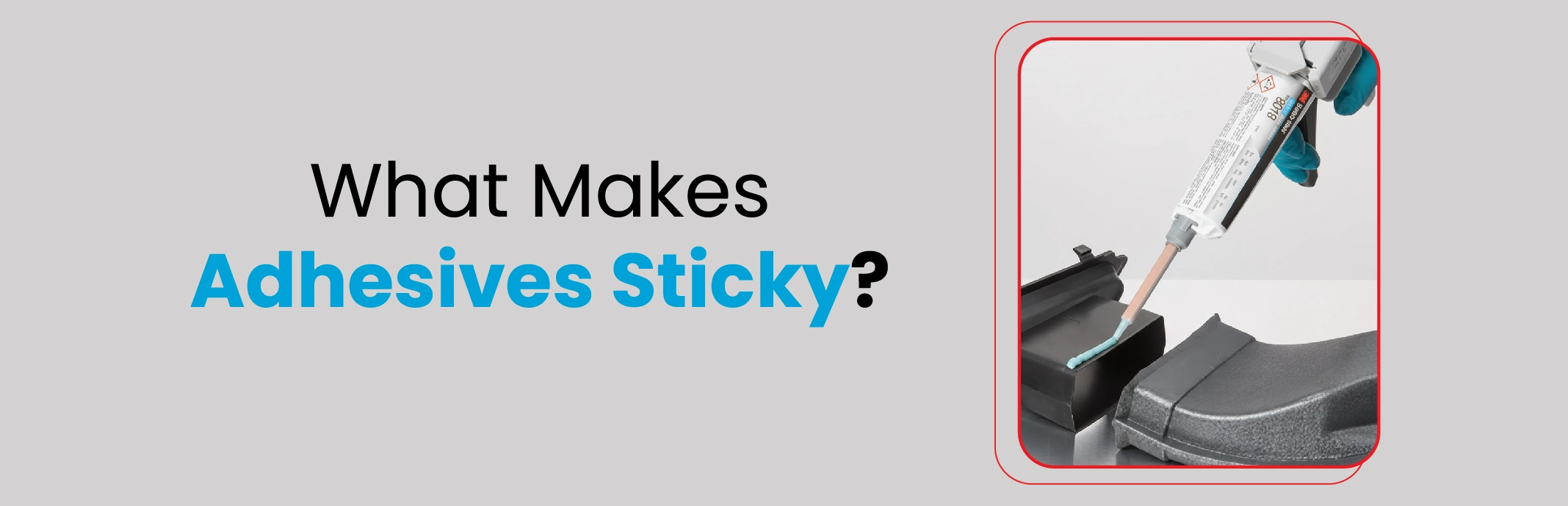
Not all glues are created equal. Structural adhesives are a distinct class of materials designed to hold load-bearing joints permanently. These powerful formulations often epoxies, urethanes, or acrylics are engineered to replace or augment traditional mechanical fasteners like screws, rivets, and welding. They provide superior stress distribution across a joint, preventing the localized stress points that metal fasteners create, thus increasing the durability and longevity of the final product.
The Role of Fillers and Reinforcement
High-performance adhesives often contain various fillers to enhance their properties. For example, specialized additives can improve impact resistance, control viscosity (how easily the glue flows), or increase thermal conductivity. When discussing products for demanding applications, such as heavy-duty repairs or composite manufacturing, the term 3M fillers often comes up. These are additives, sometimes high-strength mineral particles, used within the adhesive matrix to reinforce the bond, improve dimensional stability, and ensure the material performs predictably under stress. This meticulous formulation further answers the question of What Makes Adhesives Sticky? it’s not just the resin, but everything added to it.
Maximizing the Bond: Preparation is Power
Even the most advanced adhesive cannot overcome a poorly prepared surface. A reliable bond requires the adhesive to achieve maximum contact with the substrate. Any contaminant oil, dust, grease, or loose paint will act as a weak layer between the adhesive and the surface, causing the bond to fail under stress.
This is why, as experts in advanced bonding technologies, M-source emphasizes surface preparation. Cleaning, sanding, or using a primer on the material before application ensures that the full force of the molecular attraction and mechanical interlocking can take effect, making the adhesive’s stickiness count. It is the perfect marriage of advanced adhesive chemistry and sound application technique that creates a superior, lasting bond.
Conclusion
We began by asking What Makes Adhesives Sticky? and the answer is a combination of powerful, invisible forces. It’s the twin actions of cohesion vs adhesion, the microscopic gripping of mechanical interlocking, and the fleeting, yet powerful, attractions of molecular forces. Modern adhesives are a triumph of chemistry, transforming simple polymers into high-performance materials that hold together our cars, homes, and technology.
Understanding these mechanisms allows professionals to select and apply the correct products for the most rigorous challenges. Whether you need an industrial-strength repair, a robust structural bond, or a specialized sealant, knowing the science of glue empowers you to create connections that endure.
For professional-grade solutions that redefine performance, M-source has the materials to stick your project together.