What are 3M Putty Fillers and Where We Can Use?

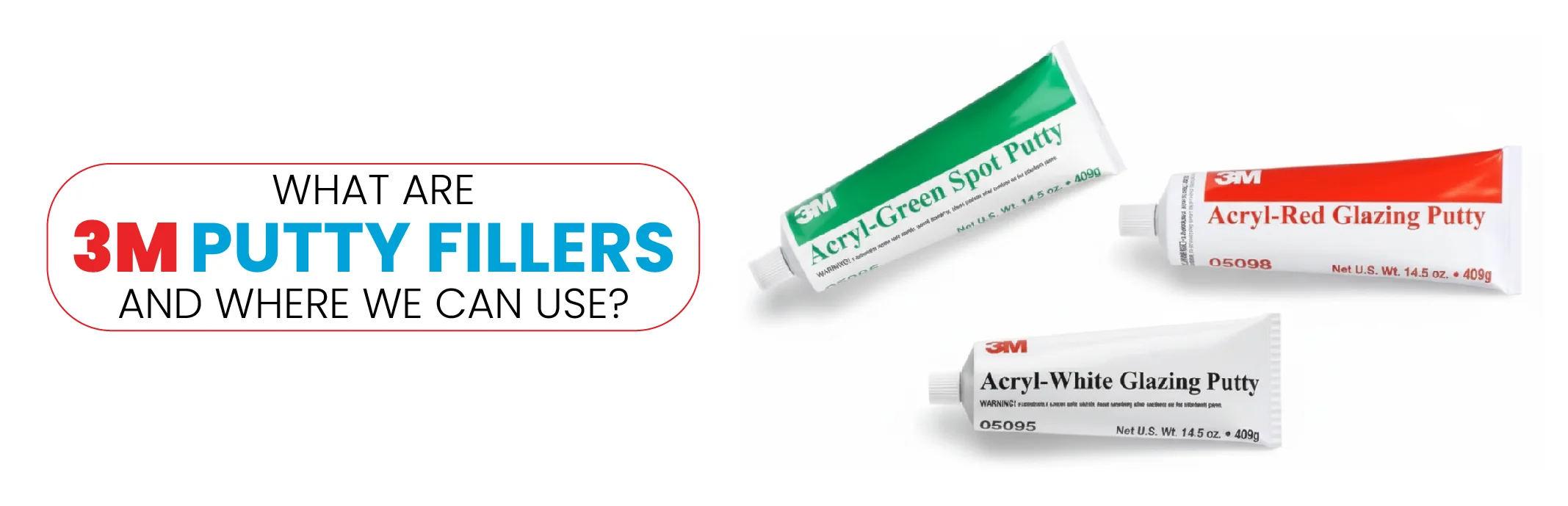
Repair projects often involve fixing dents, scratches, or holes. Getting a perfect finish means you need a product to fill these imperfections. But with so many options putties, fillers, patches it's easy to get confused. As a supplier, M-Source gets these questions daily. Let's clear the air and focus on What Are 3M Putty Fillers?
This isn't one single product. It's a category of professional-grade repair materials M-Source supplies. Each filler putty is made for a specific job. You can't use a car filler on a wood floor. The answer to what putty filler is that they are a range of problem-solvers.
The Biggest Mix-Up: Wood Filler vs. Putty
To use them correctly, you first need to understand the most common point of confusion. When people ask What Are 3M Putty Fillers?, they are often thinking of wood repair. But the question we get asked more than any other is what's the difference between wood putty and wood filler? People use these names interchangeably, but they are completely different.
- Wood Filler: This is used on bare, unfinished wood. It's made from wood fibers and a binder, and it dries rock-hard. You use it before staining or painting. Because it's hard, you can sand, drill, and paint it. It's for structural repairs like deep gouges or chips.
- Wood Putty: This is used on finished wood. It is a soft, non-hardening, clay-like material. Its job is to cosmetically fill small holes (like nail holes) after staining. Wood putty fillers come in colors to match your finish. You press it in, wipe it clean, and you're done. No sanding is needed.
Understanding this wood filler vs putty difference is the key. Filler is a repair material for unfinished wood; putty is a touch-up product for finished wood.
The Two Main Types of Filler Putty
Now, back to the main question: What Are 3M Putty Fillers? They are a family of products, and we can group them into two main types based on how they harden.
Two-Part Fillers (Polyester or Epoxy) these are the heavy-duty repair compounds. They come with a can of thick paste (the filler) and a small tube of cream (the hardener). You must mix them to start a chemical reaction. This gives you a short time to work before the filler cures extremely hard and durable. These are for deep, large, or structural repairs.
One-Part Fillers (Acrylic, Vinyl, or Water-Based) these are pre-mixed and ready to use. They harden by air-drying as the water or solvent in them evaporates. These are for smaller, non-structural fixes like scratches or sealing small gaps.
Where to Use Putty Fillers: A Guide by Job
The best way to understand these products is to see where you can use 3M Putty Fillers.
Automotive and Marine Repairs: This is the most famous use. Fixing a dent in a car or a gouge in a boat isn't just about looks; it's about a lasting repair. You need a strong, two-part polyester body filler putty. It's engineered to stick to metal and fiberglass, cure fast, and withstand vibration and moisture. It can be sanded to a perfectly smooth, feather-edged finish, which is why it's what body shops use before painting. You'll often hear this called bondo putty filler, a brand name that has become a general term for these fillers we supply.
Woodworking and Carpentry: As we covered, woodworking uses both types. For serious repairs on unfinished wood (like a piece of furniture you are building or restoring), you need a hardening filler that acts like the wood itself. For the final touch-ups on finished trim, you'd use a non-hardening wood putty to match the color.
Home and Floor Repairs: Your home has many surfaces that take abuse. A floor putty filler for wood must be strong enough for foot traffic but also flexible enough to move with the wood's natural expansion and contraction. A chip in a concrete step or garage floor requires a completely different solution, like a tough epoxy filler that bonds to masonry and resists water and chemicals.
Plastic and Vinyl Repairs: Modern materials need special solutions. A wood filler won't stick to a plastic bumper or vinyl siding. You need a vinyl filler putty, a flexible compound engineered to chemically bond to plastics, PVC, and vinyl. This lets you fix cracks and holes where traditional fillers would fail and pop right off.
Understanding What Are 3M Putty Fillers? is all about matching the product to the material and the stress it will face.
How to Correctly Use 3M Putty Fillers (A Basic Guide)
Knowing What Are 3M Putty Fillers? is the first step. Knowing how to use them is the second. The steps will change (always read the product's directions!), but here is a simple guide for a typical two-part hardening filler.
Prepare: This is the most important step. The surface must be 100% clean, dry, and free of all rust, paint, or grease. Sand the area with coarse sandpaper (like 80-grit) to rough it up. This "scuff" gives the filler a clean, mechanical grip.
Mix: (For 2-part fillers). Scoop the filler you need onto a clean, non-porous mixing board. Add the correct amount of hardener as shown in the directions. This ratio is critical too much hardener and it cures too fast, too little and it may never harden. Mix quickly and completely until it's one uniform color. Only mix what you can use in the next 3-5 minutes.
Apply: Use a flexible spreader to apply the mixed filler. Press down firmly to force the filler into the dent, crack, or hole. Spread it so it's slightly higher than the surrounding surface, as it will shrink a tiny bit and you will be sanding it down.
Cure: Let the filler dry and harden completely. This can take as little as 20 minutes, depending on the temperature. It should be hard and cool to the touch. In its "cheese" state (partially cured) you can sometimes shape it with a file, but most sanding is done when fully hard.
Sand: This is where you get the smooth finish. Start with a medium-grit sandpaper (like 120 or 180-grit) on a sanding block to level the filler and shape the repair. Once level, switch to a fine-grit paper (like 320-grit) to sand it perfectly smooth and "feather" the edges into the surrounding area.
Finish: The repair is now permanent and stable. It's ready for a coat of primer (which seals the repair and finds tiny pinholes) and then your final color paint.
Conclusion
So, in the end, What Are 3M Putty Fillers? They are a wide range of specialized repair products that M-Source supplies to solve problems. They are not for every job. The secret to a perfect repair is to identify your material (metal, wood, plastic?) and choose the specific filler for that exact job. From a body filler putty for cars to wood putty fillers for trim, having the right compound turns a headache into a simple, professional fix.
Find the right repair solution at M-Source for your next project in our catalog today.