Understanding Two-Part Adhesives

Have you ever tried to fix something with regular glue, only to have it fall apart again a week later? We’ve all been there. Whether it’s a cracked plastic car bumper, a chip in a fiberglass boat, or a tough repair in the workshop, some jobs need more strength than your average superglue. For those durable repairs, you should use two-part adhesives.
If that sounds too much, don’t worry. These powerful bonding agents are surprisingly easy to use. They provide a level of strength that can fix things you thought were beyond repair. In this guide, we’ll explain what they are, how they work, and why two part adhesives might become your go-to tool for handling the most challenging tasks.
What Exactly Are Two-Part Adhesives?
Let's keep it simple. Think of it like baking a cake. You have your dry ingredients and your wet ingredients. On their own, they’re just flour and eggs. But when you mix them, a chemical reaction happens, and you create something entirely new and much stronger (and tastier!).
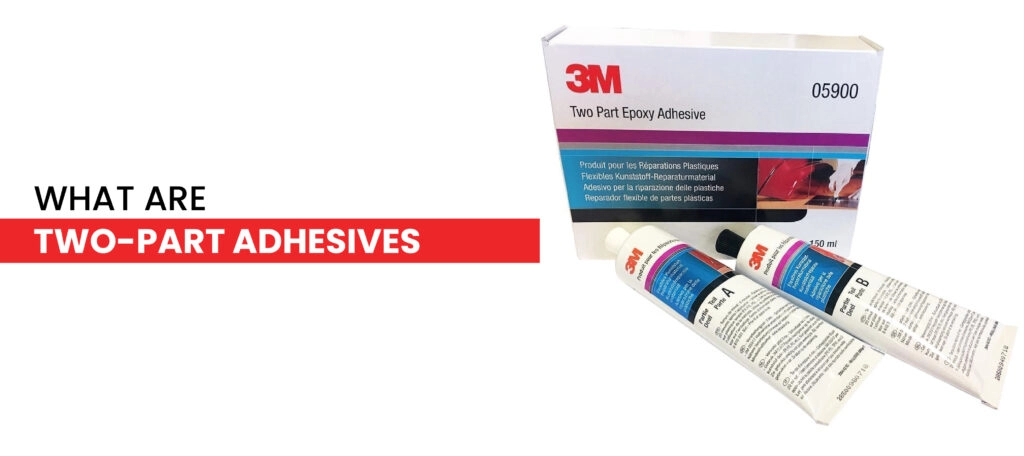
Two component adhesives work in the same way. They come with two separate components:
- The Resin (Part A): This is the main body of the adhesive. Think of it as the foundation.
- The Hardener or Activator (Part B): This is the catalyst. When it’s mixed with the resin, it kicks off a chemical reaction.
On their own, these two liquids will just sit there. But the moment you mix them, the clock starts ticking. A process called curing begins, where the two parts cross-link and bond on a molecular level. This isn't just "drying" like white school glue; it's a chemical transformation. This is how a two part adhesives cure works to create a rock-solid, permanent bond that’s often stronger than the original material itself. This powerful reaction is what separates a simple two part glue from everything else. If you are wondering which adhesive is usually supplied in two parts, it is typically an epoxy, polyurethane, or acrylic structural adhesive.
Where Can You Use This "Super Glue on Steroids"?
Because they are so strong and versatile, you’ll find 2-part adhesives being used everywhere, from high-tech aerospace manufacturing to everyday automotive repairs. They are the go-to solution when a bond needs to withstand serious stress, vibration, or harsh conditions.
Here are just a few places where these workhorses shine:
- Automotive Repairs: This is a huge one. Mechanics and body shops use them for everything from repairing cracked plastic bumpers and bonding body panels to fixing interior components. The bond is strong enough to handle constant vibration and temperature changes.
- Marine Applications: Got a fiberglass boat? Two component glue is your best friend. It’s fantastic for repairing cracks in hulls and other boat parts because many formulas are completely waterproof and resistant to chemicals once cured.
- Manufacturing and Assembly: In factories, these 3m adhesives are used to bond dissimilar materials that can’t be welded, like attaching metal to plastic. Depending on the materials, the specific two part adhesive type (like epoxy or methyl methacrylate) will be chosen for its unique properties.
- Construction: From anchoring bolts into concrete to structurally bonding building materials, a 2 part adhesive provides a reliable and permanent hold.
- Serious DIY Projects: For home repairs where failure is not an option, like fixing heavy ceramic pots or repairing high-stress parts on equipment, a two part super glue offers peace of mind that the fix will last.
How to Use 2-Part Adhesives Like a Pro (It's Easy!)
The key to a successful bond is all in the process. While incredibly powerful, using them is straightforward if you follow a few simple steps.
- Preparation is Everything: You wouldn’t paint a dirty wall, right? The same goes for gluing. Your surfaces must be clean, dry, and free of any oil or dust. For a super-strong grip, it’s a good idea to scuff up smooth surfaces with a bit of sandpaper. This gives the adhesive more to grip onto.
- Mix It Up (Correctly!): This is the most important step. The resin and hardener need to be mixed in the correct ratio (usually 1:1, but always check the label). The easiest way to do this is with a dual-cartridge system. These cartridges hold both parts separately and push them out at the same time through a special nozzle that mixes them for you. It’s a foolproof way to get the perfect mix every time, with no mess. Some products, like a 2 part spray glue, even handle this process for you.
- Apply and Position: Once mixed, you have a limited amount of "work time" (also called "pot life") before the adhesive starts to harden. This is your window to apply the two part glue and get your parts positioned exactly where you want them.
- Clamp It and Let It Cure: For the strongest bond, press the parts together firmly. Using a clamp is a great idea. Now, just let it be. The two part adhesive cure time is how long it takes for the chemical reaction to fully complete. It might feel hard to the touch in an hour, but it can take up to 24 hours to reach its maximum strength. Be patient!
The Big Benefits: Why Bother with a 2-Part Adhesive?
So, why choose a 2 part adhesives over a simpler, one-part glue?
- Incredible Strength: They create a structural bond that can handle immense stress, impact, and vibration.
- Amazing Versatility: They can bond almost anything to anything metal, plastic, wood, ceramic, composites, and more.
- Gap-Filling Power: Unlike thin glues that run, two-part adhesives are often thicker and can fill in gaps, cracks, and voids, making them perfect for imperfect surfaces.
- Extreme Resistance: Once cured, the bond is highly resistant to water, chemicals, heat, and humidity.
- You Control the Cure: The adhesive won’t harden until you mix it, giving you complete control over when the bonding process starts.
Conclusion
While they might sound complex, 2-part adhesives are one of the most reliable and powerful tools you can have in your workshop or garage. By creating a chemical bond that’s tougher than the original materials, they offer a permanent solution for the most challenging repairs. With modern, easy-to-use cartridge systems, getting a perfect mix has never been simpler. So the next time you face a repair that needs to be absolutely permanent, don't just glue it, bond it.