

Which Adhesives Work Best for Electronic Components? Adhesive Guide

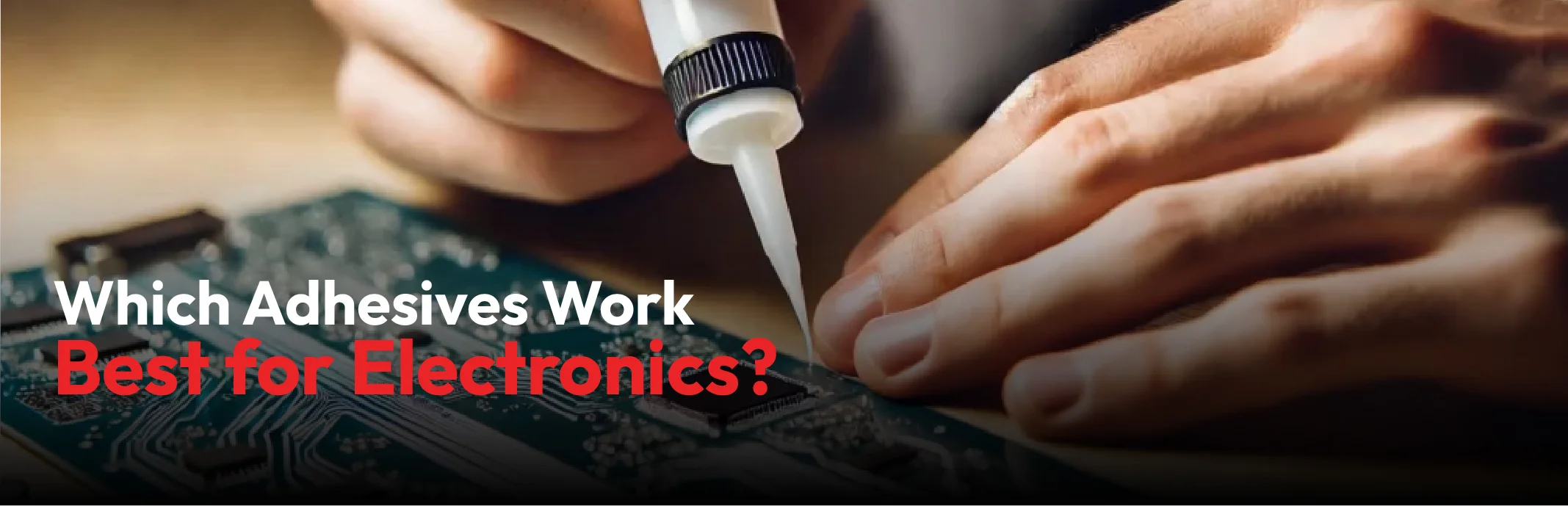
Modern electronic devices are marvels of engineering, becoming smaller and more powerful every year. As components shrink, the methods used to secure them must evolve. In many cases, traditional mechanical fasteners are no longer practical, leading manufacturers to rely on high-performance chemical bonding.
At M-Source, we serve as an authorized distributor of 3M adhesives, providing the industry with the specialized materials needed for reliable assembly. Choosing the right electronic component adhesives is critical and the wrong choice can lead to chemical corrosion, signal interference, or total mechanical failure. This guide explores which adhesives work best for electronic components and how to find the right chemistry for your specific application.
Electronic Component Adhesive Applications
In the world of adhesives in electronics, there is no one-size-fits-all solution. Different parts of a Printed Circuit Board (PCB) or device housing require specific bonding characteristics. Here are the basic ways these materials are used in manufacturing at the current time.
PCB Adhesives and Surface Mount Technology
PCB adhesives are often used to hold Surface Mount Devices (SMDs) in place before they are permanently soldered. These adhesives must have high forming strength, meaning they hold the part firmly immediately upon contact. They must also survive the intense heat of a reflow oven or wave soldering machine without outgassing or losing their grip.
How to Stake Electronic Components Using Adhesives
Staking is a vital process for strengthening a board. Large, heavy components like electrolytic capacitors or inductors are prone to breaking their solder joints due to vibration or shock. Ruggedizing adhesives are applied to the base of these components to anchor them to the board. When you learn how to stake electronic components using adhesives, you mainly create a shock absorber that prevents lead fatigue and extends the life of the device.
Wire Tacking Adhesives
During assembly or repair, loose wires often need to be routed across a board without interfering with other components. Wire tacking adhesives are typically fast-curing cyanoacrylates or UV-acrylics that secure these wires instantly. This prevents wires from moving during operation, which could otherwise lead to wear or electrical shorts.
Chip on Board (COB) Adhesives
Chip-on-board adhesives, often called glob tops, are used to encapsulate a semiconductor chip that is mounted directly to a substrate. These COB adhesives provide a protective barrier against moisture, dust, and physical damage. They must have low ionic impurity to ensure they do not interfere with the delicate electrical signals of the chip.
Sensor and Connector Adhesives
Sensor adhesives require high environmental resistance because sensors are often the parts of a device exposed to the outside world. Similarly, connector adhesives are used to reinforce the points where cables plug into a device. Because connectors face constant physical stress from being plugged and unplugged, these adhesives prevent the connector from being ripped off the PCB
Choosing the Right Adhesive Chemistry
To determine which adhesives work best for electronic components, you must understand the adhesive chemistry behind the product. Each chemical family offers unique benefits.
Epoxy Adhesives
Epoxies are the most common adhesives used in electronics due to their incredible strength and chemical resistance. They are excellent for structural bonding and staking. They are available in one-part heat-cure formulas or two-part room-temperature cure versions.
Silicone Adhesives
Silicone adhesives are the gold standard for flexibility. Electronics expand and contract as they heat up and cool down. Silicones can stretch and compress without cracking, making them perfect amplifier adhesives where heat generation is high. They also provide excellent moisture sealing for outdoor electronics.
Hot Melt Adhesive
While not suitable for high-heat environments, hot melt adhesive is frequently used for low-cost cable management and housing assembly. It provides an instant bond, which is ideal for high-speed production lines where parts need to move to the next station immediately.
Acrylic Adhesives
Acrylics are known for their fast cure times and ability to bond to a wide variety of plastics. Many UV-curable 3M adhesives are acrylic-based, allowing for cure-on-demand processing, which significantly reduces assembly time.
Technical Performance Metrics
To truly understand which adhesives work best for electronic components, engineers must look at specific performance data. A high-quality electronic component adhesive must balance several technical requirements.
Thermal Management and Conductivity
As processors get faster, they generate more heat. If this heat is trapped, the component will fail. Thermally conductive Adhesives are filled with specialized particles (like aluminum oxide or boron nitride) that allow heat to pass through the glue and into a heat sink. This is a common requirement for amplifier adhesives, where power transistors generate significant thermal energy.
Dielectric Strength and Insulation
Conversely, most adhesives in electronics must act as insulators. Dielectric strength measures how much electrical voltage a material can withstand before it breaks down and conducts electricity. High-quality PCB adhesives must have high dielectric strength to prevent arcing between closely packed circuit traces, which could cause a fire or short circuit.
Coefficient of Thermal Expansion (CTE)
Every material grows when it gets hot. If a glue expands much faster than the circuit board it is attached to, it will crack the solder joints or the board itself. Matching the CTE of your ruggedizing adhesives to the substrate is a hallmark of professional electronics design. This is why flexible silicone adhesives are so popular; their low modulus allows them to absorb these mismatched movements without causing damage.
The Importance of High-Purity Formulations
In general-purpose bonding, small amounts of salt or chemicals do not matter. In electronics, they are devastating. When choosing COB adhesives or chip on board adhesives, purity is the top priority.
Standard glues often contain ionic contaminants, like chlorine, sodium, or potassium. When moisture enters the device, these ions can create a tiny battery like effect that eats away at the microscopic gold or copper wires. Professional-grade 3M adhesives are specifically formulated to be low-halogen and high-purity to make sure that the internal circuitry remains brand new for decades.
Key Considerations for Electronics Adhesives
When picking out a product from M-Source, keep in mind these four technical factors:
- Viscosity and Flow: Does the adhesive need to be a thick gel that stays in place (thixotropic), or a thin liquid that flows under a chip (underfill)?
- Outgassing: In sensitive optical or aerospace applications, adhesives can release vapors as they cure. These vapors can fog lenses or contaminate sensors. Choosing low-outgassing 3M adhesives is vital in these cases.
- Cure Method: Will the adhesive cure at room temperature, or does your process allow for a heat-cure oven or UV light station?
- Adhesion to Low Surface Energy (LSE) Plastics: Modern housings are often made of specialized plastics that repel glue. You may need a specific 3M adhesive designed for LSE materials.
Ruggedization and Environmental Protection
In industries like automotive or aerospace, electronics are subjected to extreme conditions. Ruggedizing adhesives must pass rigorous testing, including thermal cycling (jumping from extreme cold to extreme heat) and vibration testing. By using high-quality 3M adhesives from M-Source, you ensure that your components remain functional even when subjected to G-forces or high humidity.
For outdoor applications, such as sensor adhesives for weather stations or telecommunications, the adhesive must also resist UV radiation. Over time, sunlight can turn standard resins yellow and brittle. Using a UV-stable silicone adhesive ensures the seal remains flexible and watertight for the entire life of the product.
Best Practices for Application
The proper application is the key to making sure the adhesives work best for electronic components. If you are wondering what adhesive solutions are ideal for compact electronic devices?, the answer is often found in precision application methods.
- Surface Preparation: Always clean the PCB with isopropyl alcohol or a specialized electronic cleaner to remove flux residues or finger oils. Even a tiny amount of oil can cause the adhesive to bead up and fail.
- Precision Dispensing: Use automated dispensing systems or fine-tip needles to apply the exact amount of glue needed. Over-applying can lead to shorts or bridging between components.
- Storage and Handling: Many high-performance adhesives are sensitive to shelf life and temperature. Always store your adhesives according to the manufacturer's instructions, some may even require refrigeration to maintain their chemical properties.
- Cure Time: Never rush the curing process. Moving a board before the adhesive has reached its handling strength can result in misaligned components.
Choosing the right glue for electronic components is a delicate balance of mechanical strength and electrical safety.
Conclusion
The reliability of a modern electronic device often depends on the invisible bonds holding it together. From PCB adhesives used in high-speed SMT lines to silicone adhesives that protect sensitive sensors, the right material choice is the foundation of quality manufacturing. By understanding how adhesives work best for electronic components, you can build products that withstand the test of time and the rigors of the real world.
At M-Source, we pride ourselves on being more than just an industrial electronic component adhesive suppliers; we are your production partner. As an authorized seller of 3M adhesives, we carry the full range of high-performance materials your project demands, ensuring you have access to the latest innovations in adhesive chemistry.
Need help selecting the electronic component bonding materials for your PCB? Browse our extensive collection of 3M adhesives at M-Source today, or contact our team for expert guidance on your specific application. Let us help you find the perfect bond for your next innovation.